Corona Virus: Ministers 'looking at ways to relax travel quarantine rule'
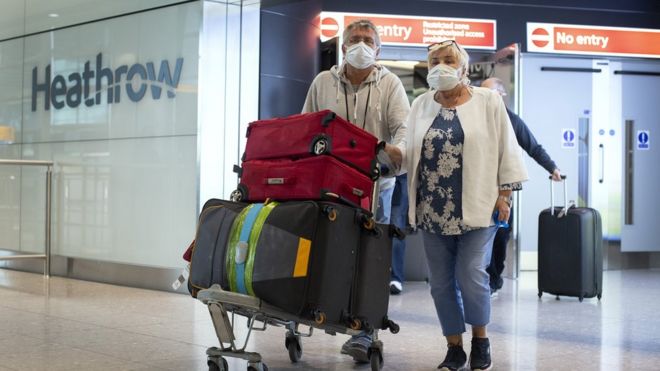
The government is looking at ways to relax the 14-day quarantine rule for people entering the UK over coming months, BBC News night has learnt.
From Monday, most people arriving by plane, ferry or train - including UK nationals - must self-isolate.
But some MP's and businesses have expressed concern at the plan, warning it will damage the travel industry.
One government source told News night that ministers were looking at ways around the corona virus quarantine.
This could include travel corridors to countries with low infection rates, or expanding the list of workers who are exempt from the 14-day rule.
Any changes would be guided by the science but one possible date for a relaxation to the rule could be 20 July, coinciding with school holidays, Newsnight was told.
- What are the new quarantine rules for passengers ?
- Will I be able to go on holiday this year ?
- UK must agree 'air bridges', warn business groups
The quarantine measures come into force on 8 June and will apply to most people, although some professions are exempt, such as lorry drivers, seasonal farm workers, and corona virus medics.
Also exempt will be people coming from the Irish Republic, the Channel Islands and the Isle of Man.
Travelers will have to tell the UK government where they will be staying and if they do not provide an address, officials will arrange accommodation.
In England, there will be random spot checks and £1,000 fines, while governments in Scotland, Wales and Northern Ireland can impose their own penalties.
The plan is expected to be set out in more detail on Tuesday when it is laid before Parliament. MP's are returning to Westminster on Tuesday after weeks of proceedings taking place virtually.
Extra guidance about what arrivals would be allowed to do is also expected to be set out, including that travellers will be allowed to take public transport if they are unable to get to their accommodation by any other means.
The quarantine plan is due to be reviewed every three weeks, with the first review of the plan due at the end of June.
Announcing the plan last month, Home Secretary Priti Patel said the measure would "reduce the risk of cases crossing our border".
But since then the plan has faced criticism from some of the government's own MP's as well as the travel and aviation industry.
One former cabinet minister told News night the idea was daft and suggested that the government will not "go to the stake on this".
Meanwhile, more than 200 business leaders have called on the government to scrap the policy, saying it was "deeply worrying for our economy and our country".
The group of firms - including hotel The Ritz and upmarket travel agent Kuoni - want the government to instead introduce "air bridges", an arrangement which allows people from countries with low levels of Corona virus to travel.
Last month, the bosses of airlines including EasyJet, Tui, Jet2 and Virgin Atlantic also said they had "serious reservations" about a "blanket approach" to all arrivals into Britain
At the weekend, former environment secretary Theresa Villiers told BBC Radio 4's Westminster Hour she thought quarantine rules should be targeted on flights "from Covid hotspots".
She also said the government was "actively looking at air bridges".
BBC transport correspondent Tom Burridge said reports in the Portuguese media "suggest an air bridge with Portugal is on the cards".
But, he added, the UK is behind other countries in Europe in terms of controlling the virus and so, in negotiations, "the ball might not be in the UK's court".
A government spokesman previously said: "These cross-government public health measures are designed to keep the transmission rate down, stop new cases being brought in from abroad and help prevent a devastating second wave of corona virus.
"All of our decisions have been based on the latest scientific evidence.
"The list of exemptions has been agreed by all government departments in consultation with their stakeholders which will ensure critical supplies and services can continue and will be kept under review."
It comes as the number of people who have died after testing positive for the virus in the UK reached 39,045.
On Monday, nurseries and primary schools across England opened their doors to more pupils for the first time after more than 10 weeks.


Comments
Post a Comment